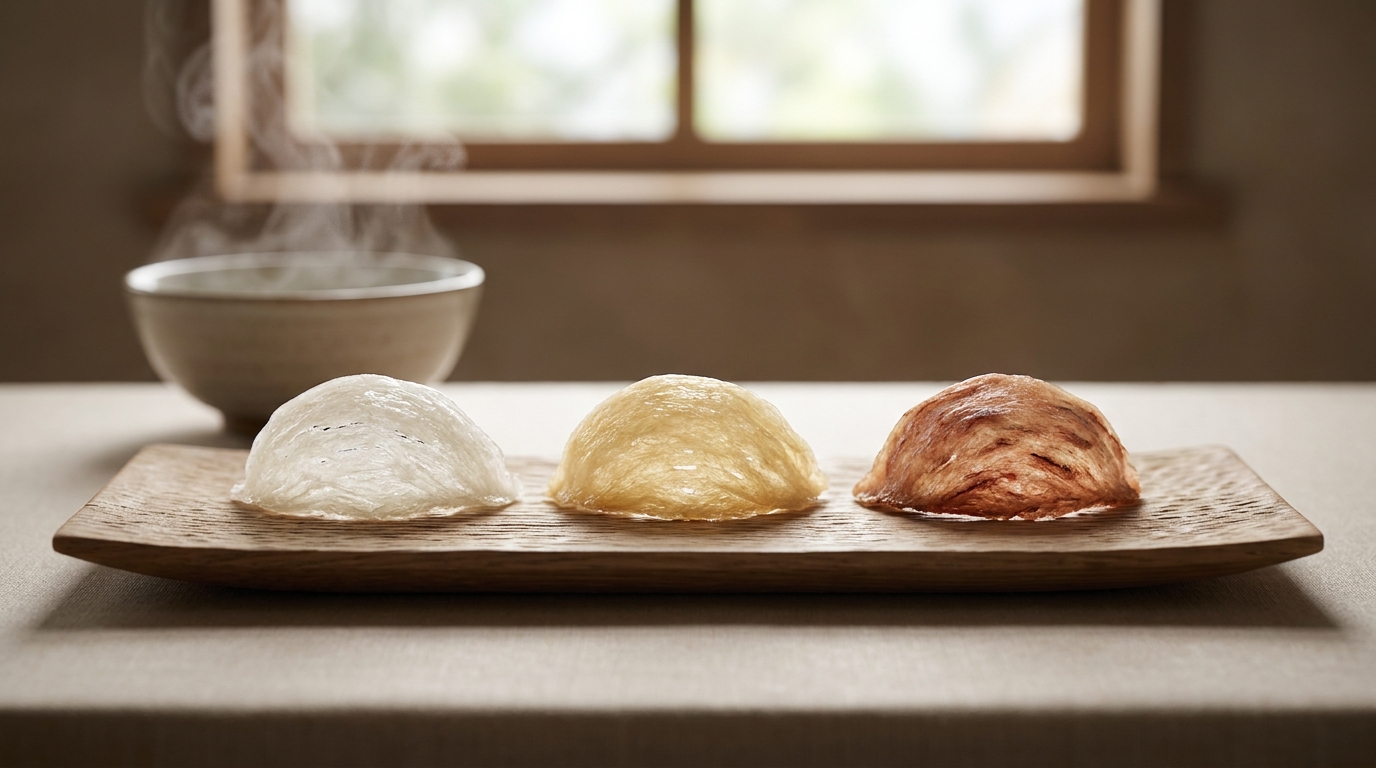
White, Yellow, and Red Bird's Nest: Grades and Colours Explained
One of the first things buyers notice about edible bird's nest is its colour — most are white, some are yellowish, and the rarest are red. These colours are not just cosmetic: they reflect how and where the nest formed, and they strongly influence value. Red 'blood' nests in particular fetch premium prices, which unfortunately invites imitation. This guide explains what the colours of bird's nest mean, how they form, and how to tell genuine colour from dye.
- Colour reflects natural conditions in the swiftlet house, not bleaching
- White nests are the most common and have stable supply
- Yellow nests are less common with an ivory tone
- Red (blood) nests are the rarest and most valuable
- Genuine red colour is natural and does not bleed when soaked
Why bird's nest comes in different colours
The colour of edible bird's nest forms naturally and depends on the environment of the swiftlet house — factors such as humidity, mineral content, and the conditions the nest is exposed to over time. The swiftlet's saliva itself is naturally light, and most nests are therefore white or off-white. Under certain conditions the colour deepens to yellow or, very rarely, red. Importantly, these colours develop without any chemical bleaching or dyeing in genuine product, which is why understanding natural colour formation is the key to spotting fakes.
White bird's nest
White nests are by far the most common and form the backbone of the market. Their natural off-white to ivory colour signals clean saliva and good conditions, and they are prized for premium consumption and gifting. Because they are the most abundant, white nests offer the most stable and reliable supply for regular export contracts. For most importers, white bird's nest is the practical choice: consistent demand, dependable availability, and a clean appearance that buyers trust. Quality within white nests still varies by shape, cleanliness, and strand integrity.
Yellow bird's nest
Yellow nests carry a deeper ivory or golden tone that forms naturally under particular conditions in the swiftlet house. They are less common than white nests, and some consumers specifically seek them out for their distinctive colour. As long as the colour has formed naturally, yellow nests are fully genuine and of good quality — the colour is simply a characteristic, not a defect. Their relative scarcity can place them above white nests in value, though they remain far more available than red nests.
Red (blood) bird's nest
Red nests, often called 'blood nests', are the rarest and most valuable type, and several misconceptions surround them. Their red colour forms naturally from specific mineral and humidity conditions over time — it is not, despite the name, caused by blood. Because genuine red nests are so scarce, they command the highest prices and are highly sought by collectors and the premium market. This high value, however, makes them a frequent target for fraud through dyeing, so buyers should be especially careful and buy only from trusted, traceable sources.
How to tell natural colour from dye
Distinguishing genuine colour from artificial dye is an essential skill when buying yellow and especially red nests. A few practical checks help protect you:
- Natural colour is uneven and varies subtly across the nest; dye is often too uniform.
- Genuine red nests do not bleed colour when soaked in water; dyed ones may.
- Suspiciously low prices for 'red' nests are a warning sign.
- Lab testing and a traceable, reputable supplier are the best assurance.
Which colour should importers choose?
The right colour depends on your market and budget. For regular, high-volume export, white nests are the practical choice thanks to stable supply, consistent demand, and a clean appearance. Yellow nests suit buyers wanting something a little more distinctive at a moderate premium. Red nests serve a niche, ultra-premium segment where rarity is the selling point and prices are high — these require extra diligence on authenticity. Many importers build their core business on white nests and offer yellow or red selectively. Whatever the colour, prioritize natural formation, cleanliness, and a supplier you can verify.
Frequently Asked Questions
Is red bird's nest really coloured by blood?
No. Despite the name 'blood nest', the red colour forms naturally from mineral and humidity conditions in the swiftlet house over time. It is not caused by blood.
Are white nests lower quality than yellow or red?
Not at all. White nests are the most common and have a clean appearance and stable supply. Yellow and red are rarer and so more valuable, but quality within any colour still depends on shape, cleanliness, and strand integrity.
How can I be sure a red nest is genuine?
Genuine red colour is uneven, natural, and does not bleed when soaked. Be wary of uniform colour or low prices. The best assurance is lab testing and buying from a traceable, reputable supplier.
Looking to import Indonesian edible bird's nest? Contact our export team for a quote and specifications.
Contact Us