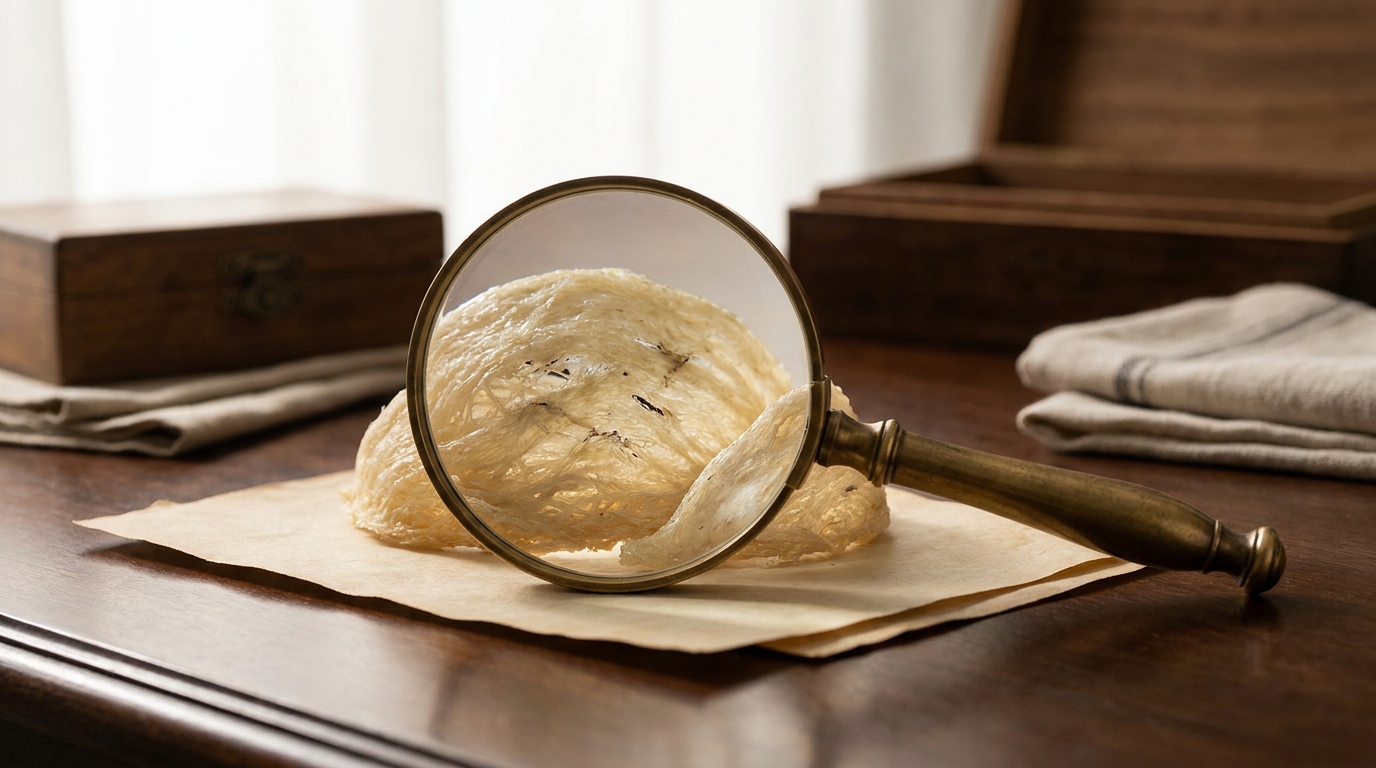
How to Identify Genuine vs Fake Bird's Nest
Because edible bird's nest is so valuable, it is a frequent target for adulteration and imitation — from glued or moulded fakes to bleached and dyed nests. For importers, the ability to distinguish genuine bird's nest from fakes protects both money and reputation. While no single test is foolproof, a combination of practical checks and proper documentation goes a long way. This guide explains practical ways to identify genuine versus fake bird's nest.
- Genuine nests have irregular, interwoven natural strands
- Real bird's nest expands and softens predictably when soaked
- Suspiciously uniform colour or brightness can signal bleaching or dye
- Over-moistened or unusually heavy nests may hide added weight
- Lab testing and traceability are the strongest assurance
Examine the strand structure
The most fundamental check is the structure of the nest itself. Genuine edible bird's nest is built from fine, irregular strands of hardened saliva that interweave into a natural, slightly uneven mesh. The strands vary in thickness and direction because they were laid down by a bird over time. Fakes made from glue, agar, or other materials tend to look too uniform, too smooth, or unnaturally regular, and may lack the fine fibrous structure. Learning to recognize the natural strand pattern is the first and most important skill in spotting imitations.
Observe soaking behaviour
How a nest behaves in water reveals a great deal. Genuine bird's nest, when soaked, gradually absorbs water, expands, and softens into separable strands while keeping its fibrous structure. Several telltale signs appear during soaking:
- Genuine nests expand and soften gradually, keeping a fibrous texture.
- The soaking water of a dyed nest may show colour bleeding.
- Fakes may dissolve, turn slimy, or fall apart unnaturally.
- An off or chemical smell during soaking is a warning sign.
Check colour and appearance
Colour offers important clues, especially for yellow and red nests. Genuine colour forms naturally and is therefore slightly uneven and varied across the nest. Suspiciously uniform brightness or vivid, even colour can indicate bleaching (to fake cleanliness and whiteness) or dyeing (to fake valuable red nests). Pure-white, flawless nests should prompt caution rather than confidence, since natural cleaned nests retain subtle variation. As a rule, natural irregularity is reassuring, while artificial perfection is a reason to investigate further.
Use smell and texture
Your senses are useful tools. Genuine bird's nest has a faint, characteristic eggy or slightly fishy aroma — mild and natural. A strong chemical, bleach, or unusually fragrant smell suggests treatment or adulteration. Texture matters too: genuine dried nest is firm and brittle, while over-moistened nests feel softer and heavier than they should, which can indicate added water weight. While smell and texture alone cannot confirm authenticity, combined with structural and soaking checks they help build a reliable picture.
Rely on testing and traceability
Practical checks are valuable, but for high-value purchases the strongest assurance comes from laboratory testing and a traceable supply chain. Lab analysis can confirm that a product is genuine swiftlet nest and screen for bleaching agents, dyes, or contamination. Equally important is traceability — knowing the nest came from a registered swiftlet house through a documented chain. Buying from a reputable, transparent supplier who welcomes testing and provides documentation is ultimately the best protection against fraud, far more reliable than any single visual check.
Frequently Asked Questions
What does genuine bird's nest look like up close?
It is built from fine, irregular interwoven strands of hardened saliva that vary in thickness and direction. Fakes tend to look too uniform, too smooth, or lack this fibrous structure.
Does real bird's nest dissolve when soaked?
No. Genuine nest gradually absorbs water, expands, and softens into separable strands while keeping its fibrous texture. Fakes may dissolve, turn slimy, or fall apart, and dyed nests may bleed colour.
Is lab testing necessary?
For high-value purchases it is the strongest assurance. Lab testing confirms genuine swiftlet nest and screens for bleaching, dyes, or contamination. Combined with traceability, it is the best protection against fraud.
Looking to import Indonesian edible bird's nest? Contact our export team for a quote and specifications.
Contact Us