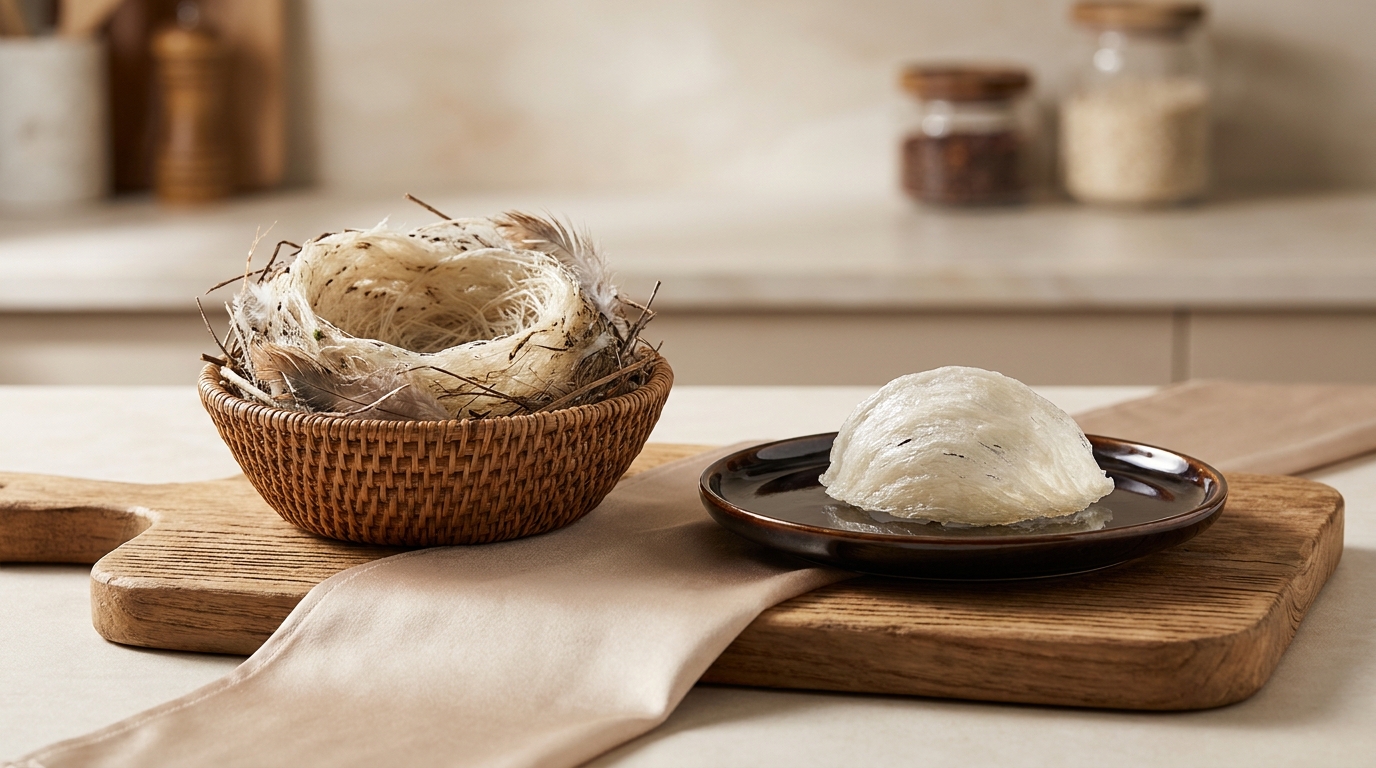
Cleaned vs Uncleaned (Raw) Bird's Nest: Which to Buy
When sourcing edible bird's nest, one of the first decisions is whether to buy it cleaned or raw (uncleaned). The two forms differ sharply in price, labour, and how they are used — and the right choice depends on your business model. Raw nests are cheaper but require intensive processing; cleaned nests cost more but are ready to use. This guide explains the difference between cleaned and uncleaned bird's nest and helps you decide which to buy.
- Raw nests still contain feathers and impurities; cleaned nests are ready to cook
- Cleaning is intensive manual labour, so cleaned nests cost more
- Raw nests suit buyers with their own cleaning capacity
- Cleaned nests suit consumer-ready and gifting markets
- Cleaning should be physical, without chemical bleaching
What is raw (uncleaned) bird's nest?
Raw or uncleaned bird's nest is the nest as harvested, still containing feathers, fine down, and other natural impurities. It retains its shape but is not yet ready to eat. Raw nests are more economical because the heavy labour of cleaning has not yet been done, and they appeal to buyers who have their own cleaning operations or who process nests further. Because raw nests have not been handled as much, experienced buyers can also assess their natural structure and authenticity directly, which is one reason some processors prefer to start from raw material.
What is cleaned bird's nest?
Cleaned bird's nest has been carefully hand-cleaned to remove feathers and impurities, leaving a product that is ready to soak and cook. This cleaning is painstaking, skilled manual work — each nest is cleaned strand by strand — which is why cleaned nests cost considerably more than raw ones. The result is a convenient, consumer-ready product ideal for retail, gifting, and food producers who do not want to clean nests themselves. Quality cleaning preserves the natural strand structure and colour without resorting to chemical bleaching.
The cost difference and why it exists
The price gap between raw and cleaned nests reflects labour, not a difference in the underlying nest. Consider what cleaning involves:
- Each nest is softened and cleaned by hand, strand by strand.
- Skilled workers remove feathers without breaking the structure.
- Cleaning yields some weight loss as impurities are removed.
- The time and skill involved add significant cost per kilogram.
Which form suits your business?
The right choice depends on your capabilities and market. If you operate or have access to a cleaning facility, buying raw nests lets you capture the cleaning margin and control quality yourself — but you take on the labour and yield risk. If you sell to consumers, retailers, or food producers who want a ready-to-use product, cleaned nests are the better fit despite the higher purchase price, because the value is already added. Many importers buy cleaned nests for consumer markets and raw nests only if they have processing capacity. Match the form to where you sit in the value chain.
Quality and authenticity considerations
Whichever form you choose, quality and authenticity remain paramount. With raw nests, inspect for genuine swiftlet-saliva structure and natural colour, and account for the cleaning yield in your costing. With cleaned nests, confirm that cleaning was physical and that no chemical bleaching was used, as bleaching damages quality and signals a problem supplier. In both cases, controlled moisture and a traceable source are essential. A good supplier is transparent about how nests were processed and can supply samples and documentation for either form.
Frequently Asked Questions
Is cleaned bird's nest better than raw?
Neither is inherently better — they suit different buyers. Cleaned nests are ready to use and suit consumer and gifting markets; raw nests are cheaper and suit buyers with their own cleaning capacity. The underlying nest quality matters most.
Why is cleaned bird's nest so much more expensive?
Cleaning is intensive, skilled manual labour done strand by strand, and it involves some weight loss as impurities are removed. This labour and yield loss explain the higher price per kilogram.
Should cleaned nests be bright white?
Not necessarily. Quality cleaning preserves natural colour without chemical bleaching. Suspiciously uniform bright-white nests can indicate bleaching, which harms quality and authenticity.
Looking to import Indonesian edible bird's nest? Contact our export team for a quote and specifications.
Contact Us