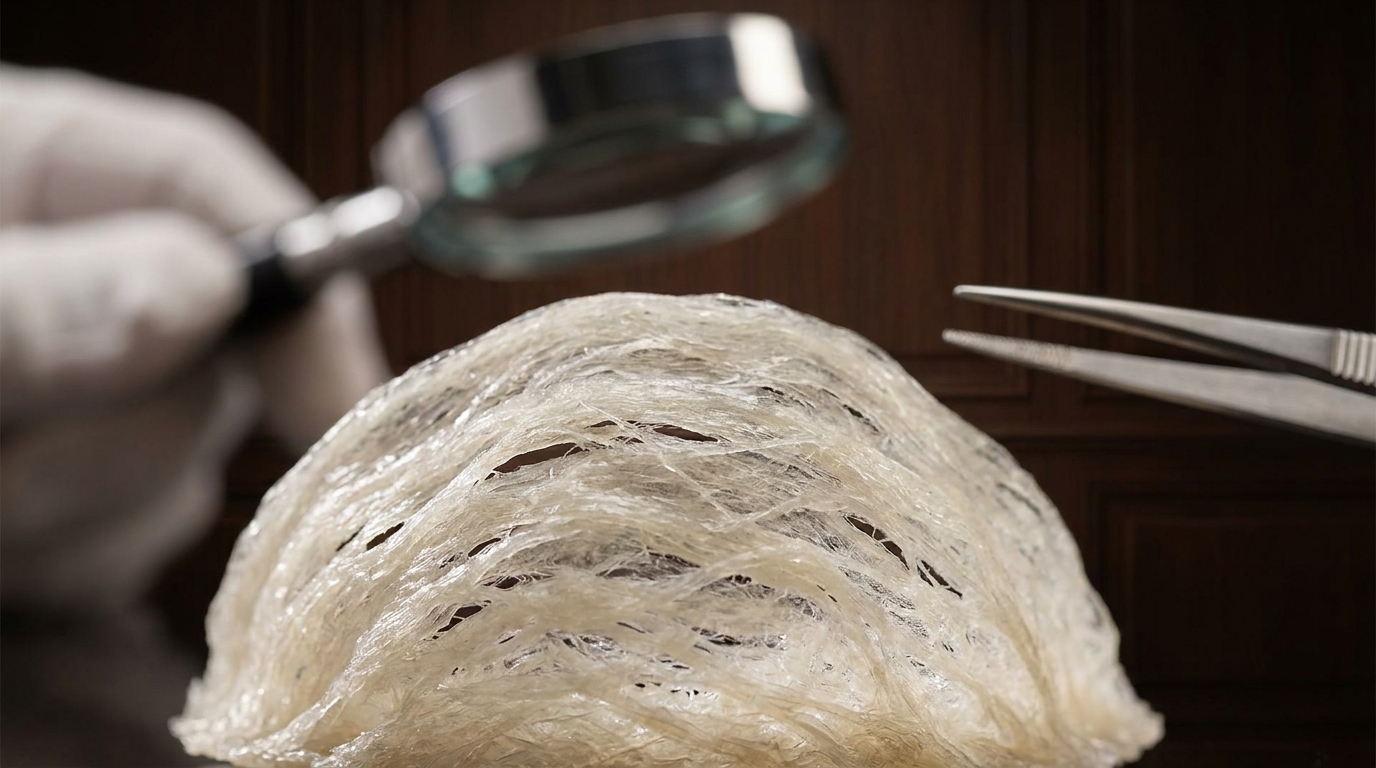
Edible Bird's Nest Grades and Specifications Explained
Unlike commodities with simple numeric specifications, edible bird's nest is graded on a combination of shape, colour, cleanliness, and moisture. These factors together determine value, and a small difference in grade can mean a large difference in price. For importers, knowing how grading works is the key to buying the right product and comparing suppliers fairly. This guide explains the main grading factors for edible bird's nest and how to specify what you need.
- Grading combines shape, colour, cleanliness, and moisture
- Whole bowl nests are the highest grade; broken pieces are more economical
- Cleanliness reflects how thoroughly feathers were removed
- Controlled moisture protects both weight value and shelf life
- Clear specifications let you compare suppliers fairly
Shape and integrity
Shape is one of the most important grading factors. Whole, intact 'bowl' or 'cup' nests command the highest value because they retain their natural form, are visually impressive, and are ideal for gifting. Corner nests, formed where two surfaces meet, have thicker and denser strands. Strips and broken pieces, while just as nutritious, are more economical and well suited to processing into drinks and other products. When specifying, decide whether your market needs whole nests for presentation or pieces for processing, as this strongly affects price.
Colour
Colour — white, yellow, or red — is both a grading and a value factor. White nests are the most common with stable supply; yellow nests are less common; and red nests are the rarest and most valuable. Genuine colour forms naturally from conditions in the swiftlet house, not from bleaching or dye. When specifying a grade, state the colour you require and insist on natural formation, since artificially altered colour is both a quality and an authenticity concern. For most regular contracts, natural white nests are the practical choice.
Cleanliness
Cleanliness measures how thoroughly feathers, debris, and impurities have been removed, and it has a major impact on grade and price. Cleaning bird's nest is painstaking manual work, so cleaner nests cost more. Grades range from raw (uncleaned) nests still containing feathers, through partially cleaned, to fully hand-cleaned nests ready to cook. Importantly, cleaning should be done physically without chemical bleaching, which damages quality and authenticity. When ordering, specify the cleanliness level you need and confirm that no bleaching is used.
Moisture content
Moisture content affects both value and shelf life, and it is an area where buyers must be careful. Properly dried nests with low, controlled moisture store well and are stable for long-distance shipping. However, some unscrupulous sellers over-moisten nests to add weight, effectively selling water at bird's-nest prices. Specify a target moisture level and confirm it on receipt. Low, controlled moisture is a hallmark of a quality, honestly traded product and protects you from paying inflated weight.
Size, weight, and consistency
Beyond the main factors, buyers often specify size and piece weight ranges, especially for whole nests used in gifting where uniform presentation matters. Consistency across a shipment is itself a quality signal: a good supplier delivers nests that match the agreed grade piece after piece, rather than mixing in lower grades. When you specify a grade, include the size or weight range if it matters to your market, and make consistency part of the agreement so you can inspect and verify it on arrival.
Putting it together: specifying your grade
Specifying edible bird's nest well means combining these factors into a clear, written description: colour, shape/form, cleanliness level, target moisture, and any size requirement. This turns a vague request into something a supplier can quote and certify, and lets you compare offers on equal terms. Request a sample that embodies the agreed grade, and use it as the reference for inspecting bulk shipments. The clearer your specification, the lower the risk of disputes and the easier it is to build a reliable, repeatable supply.
Frequently Asked Questions
Which grade of bird's nest is the most valuable?
Whole, intact bowl nests that are clean, naturally coloured, and properly dried are the most valuable. Red colour adds further value due to rarity. Broken pieces are more economical but equally nutritious.
Does cleaning affect the grade?
Yes. Cleaning is intensive manual work, so fully hand-cleaned nests cost more than raw or partially cleaned ones. Cleaning should be physical, without chemical bleaching, which harms quality and authenticity.
Why does moisture matter when buying bird's nest?
Low, controlled moisture means better shelf life and honest weight. Over-moistened nests add weight with water, inflating the price. Specify target moisture and verify it on receipt.
Looking to import Indonesian edible bird's nest? Contact our export team for a quote and specifications.
Contact Us